

If you are searching for a better way to make decisions, chances are you have already tried the classic pros and cons list and ended up feeling just as stuck. The page looks organized. The arguments seem balanced… And yet the clarity you expected never really arrives.
Decision-making often feels harder than it should because the tools we use simplify something that is naturally complex. A list captures surface-level factors, but real decisions carry emotional weight, long-term consequences and identity shifts that do not fit neatly into two columns. When the method flattens those dimensions, confusion lingers.
A better way to make decisions requires a different approach, one that accounts for time, trade-offs and the kind of future each option creates.
Why pros and cons lists aren’t the best way to make decisions?
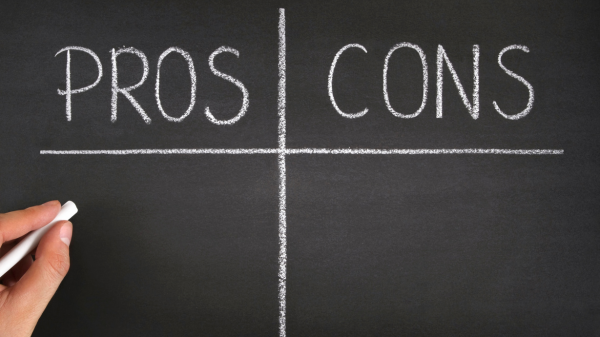
A pros and cons list treats each factor as if it holds equal importance. A minor inconvenience sits beside a major life change in the same visual space. Short-term comfort and long-term growth appear as parallel bullet points. Emotional cost, opportunity cost and energy demands are reduced to simple phrases.
This structure can make you feel productive without bringing you closer to decision clarity. Overthinking decisions often follows because you continue reviewing the same information from slightly different angles, hoping the right answer will feel obvious.
Clarity tends to emerge when you expand your perspective instead of compressing it. A better way to make decisions focuses on what unfolds after the choice, not just what looks attractive in the moment.
A better way to make decisions through consequence testing
Rather than comparing options side by side, imagine you have already chosen one.
Picture yourself six months into the future. What does your daily life look like? What new responsibilities are part of your routine? What challenges are now normal? What has improved, and what feels heavier? Then repeat the exercise with the other option.
This process is known as consequence testing. It shifts attention from abstract comparison to lived experience. You move from evaluating features to evaluating realities. A better way to make decisions considers not only what you gain, but what you must manage.
Every choice introduces a new set of problems. Some are energizing, some are draining. Decision clarity grows when you see those problems clearly and decide which set fits you better.
Using Second-Order Thinking
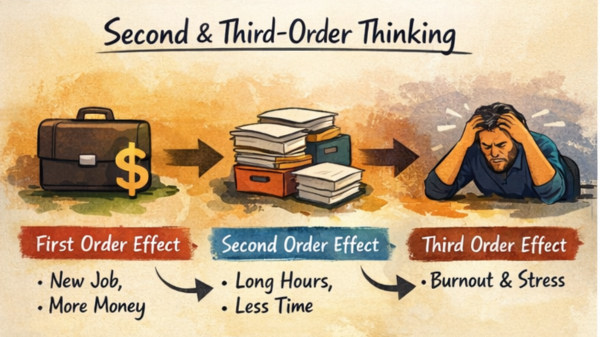
Second-order thinking strengthens this process. First-order thinking focuses on the immediate result. Second-order thinking explores what that result leads to. Third-order thinking extends the timeline further.
For example, an opportunity may increase your income immediately. Over time, it may demand more structure, more discipline or longer hours. Those changes may affect relationships, health or creative energy. When you walk through the timeline step by step, patterns become visible.
A better way to make decisions stretches beyond the present moment and considers how today’s choice reshapes tomorrow’s reality.
How to use ChatGPT to make decisions
ChatGPT can support this process when used as a simulation tool rather than a comparison engine. Instead of asking it to rank your options, ask it to explore what each path creates.
Here are practical prompt examples you can use:
Consequence Simulation Prompt
“I need to choose between two options: [Option A] and [Option B]. Assume I choose [Option A]. Walk me through the next six months in practical terms. What challenges increase? What responsibilities become more demanding? What trade-offs are involved?”
Repeat for Option B.
Second- and Third-Order Effects Prompt
“Describe the first-, second-, and third-order consequences of choosing [option], focusing on realistic daily impact.”
Identity Alignment Prompt
“What kind of person does this decision require me to become? Which habits, boundaries or traits would I need to strengthen?”
Optionality Prompt
“Which option increases my future flexibility and opportunities over the next two to three years?”
Indecision Reflection Prompt
“What might I be avoiding by staying undecided? What comfort or identity does indecision protect?”
Finally
“If I choose [option], what problems am I signing up for in the next 6 months? Are these problems easier to live with than the ones I have now?”
These prompts expand your field of view. They highlight trade-offs, surface hidden resistance and make future consequences easier to imagine. ChatGPT becomes a structured thinking partner that helps you articulate what is already forming beneath the surface.
Indecision
Indecision often feels like a pause. In practice, it keeps your current circumstances in place. Time continues to pass, opportunities shift, energy gets spent on mental loops rather than forward motion.
A better way to make decisions includes acknowledging that delay carries its own consequences. Asking yourself what you are choosing by not choosing can reveal surprising clarity.
One practical question to try today is:
“If I choose this option, what new problems am I signing up for in the next six months, and are these problems easier to live with than the ones I have now?”
A follow-up question can deepen the insight:
“What decision would likely feel obvious in hindsight?”
These questions move you from seeking perfection to accepting trade-offs. They shift attention from avoiding mistakes to selecting growth.
The better way to make decisions is choosing your trade-offs
There is rarely a flawless option. Each path reshapes your environment, your habits and your responsibilities. A better way to make decisions involves recognizing that you are selecting a future set of trade-offs and stepping into it deliberately.
When you examine consequences across time, consider identity alignment and explore optionality, decisions begin to feel grounded rather than overwhelming. Clarity grows when you understand what each choice requires and decide which version of that reality you are willing to build.
That is a better way to make decisions, one rooted in perspective, consequence and conscious commitment rather than columns on a page.
If you want to listen to my podcast, where I also cover this topic, you can go to my Podcast page, or you can listen on Spotify (or wherever you listen to podcasts).
Now go and make those decisions!